Wednesday, August 23, 2017

Art in a Time of Outrage

It will take a while to get to the art part, so please bear with me.


A lot of powerful words like “vulnerability,” “openness,” “kindness” even, have lost their sharp edges. The general image of “goodness” is cocooned in prettiness: hearts, kittens, and rainbows. Scratch the surface, however, and the angel of sweetness turn bitter and raging. I’m talking about our culture, the way we conceive and interact with each other in public forums like Facebook and social media. The easy virtues of likes and kindly, wise advice have no cost on social media. There is an easier virtue of righteously dumping on someone who steps over lines of propriety or easily-defined goodness.

I've been a terrible offender, I confess. However, I believe I'm getting better at resisting the addictive pleasure of indulging my biases. When I first encountered some of the recent studies revealing cognitive biases, I was surprised and a bit devastated. I have built a persona for myself since childhood on being able to remember what “really” happened, and to be a repository of true objective memory. Then I read all this literature that reveals to me how much of a delusion that idea really is.


The past is gone. Memory is no more reliable than imagination. The only difference between the two is our internal certainty that one is fact and the other fiction. Studies have shown how much editing goes on in the act of remembering. There is no way to access what really happened. In fact, the more you have gone over an event in your mind, the further and further it has diverged from what really happened. I don't like this idea. Part of me doesn't believe this idea. The other part of me, the part has that has been educated and trained to think a little bit from outside my own psyche and filtered consciousness, that part has shaken me in some of my cord beliefs.

All this reading about biases hasn't completely demoralized me thanks to learning about the two thinking systems in our brain, System 1 and System 2, and that we are capable of seeing past them. The efficient, automatic, effortless System 1 makes snap evaluations and gets it right 70% of the time. This makes navigating through the familiar world a breeze. But as Nobel Laureate Daniel Kahnemann wrote, “the mind is prone to systematic error under conditions of uncertainty." The mind that he talking about here is System 1 thinking.

System 2 can deal with uncertainty, with unexpected situations, with statistics and logic much better than System 1. However, System 2 takes so much energy, burning calories at the same rate as intense physical exercise, that we resist using it unless absolutely necessary. “Bias” is another word for the way System 1 handles unfamiliar situations, so that we don't have to turn on System 2 and burn calories. Both systems agree that “done is beautiful,” and that “the perfect is the enemy of the good.” The ugly stepsister of a mistaken interpretation is that, once made, we defend the wrongheaded conclusion with every weapon in our thinking arsenal. This is why social interactions can go off the rails and be impossible to save from crashing and burning.

The antidotes for this are imperfect because we have evolved as beings to avoid, whenever possible, turning on System 2 thinking. Education can mitigate this resistance in the world of ideas. But once the emotions are engaged, System 2 cannot effectively challenge System 1 any more. So really, any antidote to System 1 error must have an emotional component, and that component is some form of love. It turns out the Buddha, the Christ, the Dalai Lama, Gandhi, MLK: they were all correct. ( As a measure of just how hard such love is, look at how few names from the whole of history we can come up with easily.) Love is the only thing that can free us once our animals minds have taken over.

But love is not enough on its own. It takes an educated understanding to then move in to the terrain that has been demilitarized by love and defuse the land mines so that rapprochement can happen. So that minds can be changed. So that we can move together into a higher social, psychological, and spiritual space.

What role does art having all of this? Many people who want to change the world turn to art as the means to educate. The problem is that telling people their ideas are wrong, or showing people their ideas are wrong, in theatre or film say, backfires. It even has a name, the “backfire effect.” But I believe that art can transform culture. What all of these ideas and studies tell me is that Art needs to lead from the heart.

This is a shift for me. I've always thought that the ideas were most important. And certainly the ideas matter, but only after the door to change has been opened by emotion. By positive emotion. By validation. By love.

Unfortunately we live in a time when acknowledging, loving, validating the despised “other side” will get us pilloried. Pilloried by our own cohort. How are we going to affect change if we can't meet in neutral territory? And neutral territory by definition is common ground. What this says to me is that if you would make art that transforms the culture by bringing sides together, you have to walk into the line of fire and take a hit, or two, or a whole fusillade. Goodness is dangerous. Doing the right thing hurts. It hurts because we must deny our own biases and burn calories that our bodies tell us we should not be burning. It hurts because those we agree with who stand on our side of the divide will attack us when we step toward the other. And it hurts because we might be wrong and do more damage rather than heal existing wounds on the other side because we don't know the other side very well, really, having been fenced off by the cultural divide.


Goodness is dangerous and hard. It means moving out of one's safe space and staying good while out there. Outrage is easier. Violence is easier. Justifying ourselves in righteous victimhood in the face of other people’s criticism or pain is easier. We have plenty of examples and models for these. And so this is what art needs to do. Give us the example for dangerous goodness, for transformative connection, for cultural rebirth.

Thursday, March 31, 2016

The Hollywood Cure

(cross-posted to Susan diRende's Tumblr blog)
I’m trying to understand how Broad Humor changed my taste in films and cured me of Hollywood story fever.

I started Broad Humor in 2006 to give women a place at the table, a table I valued but which failed to validate work I saw and liked. For 9 years, I watched every submission and read every screenplay, good, bad, and ‘meh.’ Before, I loved TV and many mainstream movies. In my teens I was addicted to the flickering screen. Now, I can hardly bear to watch any of it. There is good stuff in those shows and stories, but my overall reaction is ‘meh.’

via GIPHY
I’ve written about how women’s stories tend to be structured differently and why I say women’s comedy is a way for men to experience the multiple orgasms women take for granted. Hollywood understands the Aristotelian big climax and Denouement brand of cigarette. But lately, there have been a lot of great female characters showing up, especially on TV, and I still have a hard time getting into the shows. Yes, these women are complex people in themselves, but they are still drawn with an Aristotelian pen. They still are massaged and colored so as to deliver the conflicts of the Aristotelian paradigm mostly because the DON’T TALK TO EACH OTHER. 

If you read Carol Gilligan any time since the 1970s when she published “In Our Own Voice,” you get her insight into the way women move through the world in a web of relationship instead of on a ladder or hierarchy. But as the Bechdel Test noted, even when women are present in a film, they rarely talk to each other and then usually only about men.

I don’t blame the guys for not writing other kinds of scenes. After all, they are never present when women are only talking among themselves. Even if they were to listen, they might not hear what is going on, or misinterpret it as something they do know. I mean, if dominance  hierarchy in males is 50 million years older than trees, of course they see dominance everywhere. I would say if you eliminated women scheming against another women or fighting the mommy-daughter wars, you’d have 99% of female studio film conversation. It’s like the Gary Larsen cartoon about what dogs hear when humans speak: blah blah blah dog blah good dog blah. So women talk about men when they get together? It may be all the guys hear us doing but not all of what’s going on.

via GIPHY

Still, watching films, you’d think women were corollary actors and commentators on the world, not creators and weavers. Talking isn’t action, after all. But often, as we talk together, we’re actually world-building. We use words to make visible the strings of human interaction and weave them into a web that brings the world into relationships that make sense, that can hold the complexity of the lives we’re living. That net permits the ladder-climbers, be they male or female, to survive multiple falls and keep climbing.

Heroes are the ones who save everyone from a disaster once it has happened, or perhaps they arrive at the last minute and prevent the disaster with only a bit of collateral damage. We have no stories of heroes who prevent the condition of disaster from arising. It’s like the old Chinese (?) fable of the three brothers who are doctors. The third brother is famous for curing any problem and the second is respected for keeping small illness from growing into greater disease. But the first brother is unknown outside his village because only he treats his patients in such a way that they never become sick. I think women are like the first doctor trying to stave off trouble for their web of relationship and speaking with each other is one of the ways they do this. It is why I’ve said that women write from the world and shift characters and situations to make the whole more funny or poignant. The point isn’t the character’s journey; it’s the world’s.

All this returns to my change of tastes, where even the mediocre work by women writing screenplays and making films interest me and have value for me in a way that the most popular shows on TV and big screen do not. It isn’t some grand revolutionary difference. Most work is largely derivative, so that even real women artists write and direct stories peopled by the Narrative Woman. But at least these women characters talk to each other sometimes. And then there are moments when the female creators spill over and out of the narrative molds prescribed for female characters, injecting something real from their experience and relationships.  I wake up and am suddenly engaged.

via GIPHY

There was a time in my life that I watched TV every waking minute. I hungered for story, and the only stories on the tube were by men. Well, the last 9 years of Broad Humor were my detox and I can say that I have been cured of Hollywood. Now to make a vaccine…

Saturday, August 22, 2015

Another Moronic Meme about Women Directors

The Hollywood Reporter asked Colin Trevorrow about women directing blockbusters and he repeated the meme that's surfaced claiming that women directors are self-selecting themselves out of the running. Behind the comment is the ages-old idea that women are too something-so-good that they actually  need the protection of men, or wouldn't want to sully themselves, or are not shallow enough, or maybe just don't have a penis and so naturally don't belong where the money, power, and scope also just happen to be.

Since I run a women's film festival, I know plenty of women who say they'd like to direct a blockbuster, but because they're not delusional, they focus on stories they are likely to be funded to make. Or that they can make with self- and crowd-funding.
 
Treverrow's comment is the same argument as colleges that say they want diverse faculty but the candidates aren't there. Yes, self selection is a factor, only because of structural inequality making the price too high for one group that isn't ever asked of another. And before you tell me, a pretty good cook, about the heat in the kitchen, let me explain with a different metaphor.

Let's say we're all playing a video game, but the controller we use is unique to each person. Now imagine that the game settings are different for different types of people. If you're a white male, yours is on the easiest setting and if you are female, the game settings are higher. The guys compete and prove themselves against one another and develop skill and expertise they feel proud of. But only so long as they believe the game is fair. They cannot accept and still feel good that a woman has to play at a much higher setting where a single hit takes her health to zero and sends her back to square one. They can take out a monster with one or two hits where she needs half a dozen, by which time she's dropped points and armor and so needs to spend time and coin to get back to full strength. He blames her weakness because seeing how the scoring is rigged would rob him of his hard-won status.

As for the women, some battle it out, determined to be twice as good and to beat the guys despite their hidden advantage. Other women leave the game, deciding to compete in an arena where their abilities are rightly valued. Neither is the better choice, neither is right, neither is wrong. Nor is choosing to attack and sabotage the game. We're here, our dreams are legitimate, and we can only play a game we believe there is a chance of succeeding at.

I do think women have to restrain themselves from internalizing the external inequity. I think we have to remember that the game is rigged and withhold respect from those who score and dominate while playing at the kiddie settings while the rest of us struggle to play at all at settings that are so high it is hard to get out of the starting realm.


Sunday, July 19, 2015

Top Ten Comedies... Really?!

I just read this list:  http://www.thetoptens.com/comedy-movies/. It's supposedly the top 10 comedies of all time. Me, I thought it was dimwitted. Stupidity-and-behaving-badly films mostly. Then I realized it could be a list of the top ten boy movies of all time. I have no opinion about that. But though I do like the occasional S&BB film like Groundhog Day, comedy is more than the vicarious pleasure of watching (and possibly identifying with) oblivious dicks.
How about it Broads? Am I wrong, or do you agree with me that a top ten list for comedies would be entirely different if women's opinions counted?

Thursday, October 16, 2014

Alice Guy-Blanché: The Most Important Film Director You Never Heard Of

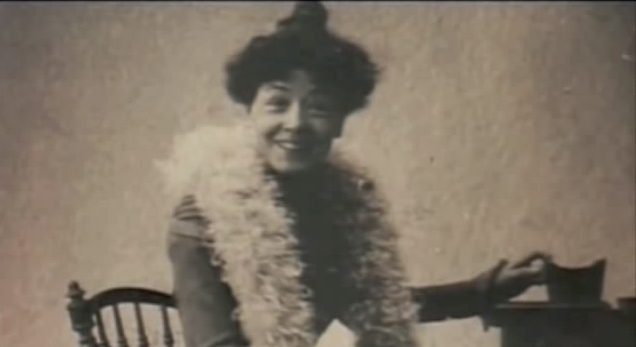
Alice Guy-Blanché
It seems that making narrative films was the brain-child of a woman, Alice Guy, who not only was the first female filmamaker ever, but whose 24-year career saw her writing, directing, and producing over 1,000 films from 1896 to 1920. She was the origin of many innovations in filmmaking,  including using double exposure, running film backward, synching music to films, and location shooting, to name a few.  Guy-Blaché not only was one of the first to put narrative fiction on film, she shaped the director's role in the process into what we think of it to be today. She hired and trained a generation of filmmakers.  Anthony Slide recounts in his history of female silent filmmakers, "it was as if, with one mighty stroke, she had single-handedly created the entire French film industry,"  Hers is not only the longest career of any film pioneer, man or woman, but she still is the only woman to manage and own a studio.

So how come you never hear of this woman whom Barbra Streisand described as "a French film pioneer who invented the director's job?" Good question. 

It is unclear why, when Gaumont published a history of the film industry in France, her name was entirely absent. When she called Gaumont on it, he promised to correct the oversight in subsequent editions. That never happened.

Apparently, she has been "re-discovered" many times in recent years, but her name and accomplishments still go unacknowledged by official film history.  Any one of her directing accomplishments should have secured her a place in the pantheon.  For example:
... as one of the first persons to direct a film with a narrative structure, and thus to direct actors to convey the essence of the narrative through gestures and actions, Alice Guy is one of the originators of filmic acting, both in theory and in practice. Indeed, she is the first real auteur of the cinema. (from Film International )
If you've studied film you probably have seen Sergei Eisenstein's Potëmkin and the "innovative" use of close-ups and reaction shots, shots that Guy used in 1904 film "The First Cigarette." You can read a great article about Alice Guy at Film International or just scan the basic facts below.   I've also posted a YouTube video of one of her early comic films, The Consequences of Feminism (1906), which is a reverse-sexism film not unlike many we get submitted to the festival.

For me, her story, what she did vs. how she is remembered, is a good lesson in structural barriers to women's  success.  It is not enough to level the playing field. If the score keepers fail to mark the wins by women, it will create an atmosphere of disregard.  Yes, a woman may seem skilled or competent, but commonplace thinking asserts that if women were really as capable as men, there would be more of their work through history.  Novels.  Paintings.  Films.  Structural inequities erase notice, and don't result in a conscious conspiracy, but rather a self-perpetuating neglect. Just as in child-rearing, indifference and neglect are far more damaging to the psyche than domineering and abuse, so too for women's creative work this indifference destroys our inner "muse" with a suffocating vacuum.  All the while preserving a comfortable deniability of chauvinism.

So what about Guy-Blanché? She worked for the French inventor Léon Gaumont when the company was primarily a maker of photographic equipment.  After accompanying her boss to a screening of a 35mm demo by the Lumiere brothers in 1896, she asked for permission to use the company cameras to make her own film. She got approval contingent on the filming not interfering with her secretarial duties. She made La fée aux choux, one of the world’s first films with a plot shot in her own garden with the help of a female friend.  Her films were very successful.
La Fée aux Choux by Alice Guy-Blanché 1896

She become the head of production of the Gaumont film studio from 1897 to 1907.  But she got married to co-worker Herbert Blanché who was almost 10 years her junior, and, well, as a married woman was expected to retire.  Raise children.

So she and her husband left for the US, where they formed Solax, one of the largest pre-Hollywood studios in America.  She was the artistic director while her husband was the production manager. Even while she was pregnant with her second son, she completed at least a film a week, proving that the Hollywood horror, voiced at a Women in Film breakfast I remember, that a woman might get pregnant and ruin a film's production schedule and be rendered by her condition unable to command the shooting of a picture, is suspect baloney worthy of Upton Sinclair's novel, The Jungle.

Hollywood's climate was more congenial to filmmaking, and when husband Herbert headed west with a starlet on his arm in 1918, Alice remained until 1922 when the divorce was final.  She then sold the studio and went back to France.


Perhaps Alice Guy-Blanché is the reason that the French have more successful, working women directors than any other country. 

Wednesday, October 01, 2014

Tired of the Manic Pixie Dream Girl?

Great series by Bitch Magazine called Tropes vs. Women.  Here's the takedown of the Manic Pixie Dream Girl fantasy by Feminist Frequency.

Perhaps it's time the Broads did some parodies.  I have a few title suggestions - perhaps you have more.

Manic Pixie Dream Grill
Manic-Depressive Pixie Dream Pill
Manic Pixie Death Girl

Oh, dear. Now I've started, I don't think I can stop.

Friday, June 27, 2014

The Girlie-in-Sports Problem

I was just watching Gnarly in Pink and enjoyed watching the little 6-year-old girls skateboarding in their tu-tus.  They were definitely little girls but also definitely athletes. Then they put up the statistic:
By the age of 14, girls are twice as likely to drop out of sports as boys.
My immediate thought was that by the age of 14, girls' bodies have gone through a huge metamorphosis that boys do not have to deal with for a few years.  Things like your center of gravity moving lower. Widening hips putting strain on the knees. Depth perception according to female tennis players who lament about how water retention before their period altering their ability to track the ball. I don't say that this proves that girls can't do sports after puberty, only that we need to recognize it and openly look capitalize on the strengths of women's bodies rather than pushing activities that only can be done by androgynous or amenorrhea-induced bodies.

I speak from experience, not as an athletic girl who lost her prowess to puberty, but one who found the pleasure in physical activity once her body changed.  I had always been the last on chosen for team sports. I had little upper body strength and short legs that made running races a loser's game for me. My dad taught me tennis at 9 and I tried my best, but was weak, lacking the long limbs and robust body type of the more tomboy-ish girls.  That's why I will never forget the day in seventh grade when I suddenly could do something effortlessly in gym class that all the other physically fit girls struggled with.  

We were learning how to jump on a trampoline.  Once we all got the basics, the teacher demonstrated something called "swivel hips."  You were supposed to bounce sitting, twisted in the air, and come down sitting facing the opposite direction. It was good-natured fun watching the girls try to find the coordination for that mid-air twist.  When my turn came, I sat, swung my broadening 13-year-old hips in a circle, and landed effortlessly facing the opposite direction.  Admiration and praise for doing something in GYM!  Never happened before.

A world opened up to me.  I had always been placed in the last row in ballet class. But at 14 I took jazz, and suddenly I was in the front row.  My twisty, sinuous, hippy body put me in the middle of my own, private, ugly duckling story.  I even got better at tennis, learning to use my spine to snap a whipping backhand.  I have ever since been a physically active person, a person who has spent a lifetime practicing dance and mime, was a clown in the circus, and who has taught movement, yoga, and dance to others.  All this was the gift of my changing body. 

The above statistic doesn't mention  how many girls take up dance.  How many start yoga. (Nor how many of the boys who quit sports, too, end up practicing these healthy, physical activities.)  Maybe girls do leave "sports" but then many "sports" are designed with the architecture of the male body in mind.  Once I realized I had a perfectly capable female body, I stopped wishing to be accepted for being able to do things privileged by the form and strengths of the male.   I offer no criticism of women whose body type lets them continue with the sports they enjoyed as girls, only that there should be activities that reveal what was revealed to me in a jazz dance class in France once. 

It was a dance class associated with the university during my junior year abroad. I was paying for three classes a week at this studio and taking the dance class that came with my enrollment for a fourth. Three young men from Iran had come to study at the university and decided to take the class for their physical education credit.  They entered the class confidently, seeing the little, lithe female instructor and short-legged, hippy me. She started what for me and for her was a slow, basic warm-up and set of moves.  The muscled trio struggled with all the core work, the fluid stretching, and the loose dynamics of the moves. After 45 minutes they were incapacitated, and the instructor ended the class early.  I had barely gotten warmed up, but understood.  This class for them was what gym class had been for me in 6th grade; all rope climbing and pushups. The three students never came back, and I wonder some times if the number of guys who say they don't dance is a reflection of their inability to take what was dished out to me almost daily until puberty.  I propose that moving with grace, that flexibility and core strength should be as privileged in elementary schools so that boys learn to respect "girlie" abilities such as "princess" poise and "ballerina" flexibility.

Friday, May 30, 2014

Make Your Resume an Infographic!

Great site where you can make a chart resume for free.  If you send a link rather than a graphic file, the resume will be interactive with more details in the rollovers. Great for us artist types who do many jobs at the same time.  Here's what I was able to do pretty quickly by copying and pasting from my resume.  Click on it and you can see the resume on the site, plus you'll get the fun background image instead of the plain white you see here...

http://vizualize.me/sudirende#

Sunday, May 18, 2014

Great Indiewire Article on Gender Bias

From Indiewire: Jane Campion and her female Cannes jury members
Great article on Indiewire about gender bias, with data and info for women filmmakers.

I know, I know.  I'm just as tired as you are of complaints that women don't get a fair shake in the film biz. We have to get over that fatigue, in my opinion, just like marathon runners have to get over being tired halfway through a race. The inequity is real.  It's entrenched.  Changes are happening at a glacial pace, if at all.  But I like to think that maybe Stephen Jay Gould's concept of "punctuated equilibrium" for evolution applies to social change as well. The system, unfair though it may be, is trying to maintain its identity in equilibrium.  So it will resist change that threatens to radically alter its identity.  A few random "mutations" may survive or breed out in a generation without shifting the species, like the few lucky women who catch a break.

(NOTE: I don't call them "lucky' because they succeeded entirely on luck.  I know they are all incredibly talented and hard-working.  Their luck is in having their hard work get suddenly rewarded, while other equally hard-working and talented women get bupkiss.)

When external pressure creates situation where the old attributes no longer fit the environment,  survival suddenly encourages mutations that fill the niches of opportunity.  At these times, species evolve very quickly and dramatically until they settle into a new equilibrium that fits the new environment.

Look at how gay marriage initiatives, stalled and thwarted for so many years, suddenly reached critical mass and state after state has been passing marriage equality legislation.  If we keep the pressure up with our "complaining" and keep making films on whatever platform we can, these may turn out to be good times to be a female filmmaker.  After all, we're already in the middle of a flux period in the entertainment business. Technology is putting on some pressure.  Changing social norms are putting on more pressure.

(Hat tip for the Indiewire article to Judy Chaikin and the Alliance for Women Directors.)

Wednesday, April 23, 2014

Genetic Differences vs. Societal Influences: A Personal Story by Neil DeGrasse Tyson


Hat tip to Upworthy.com for posting a video from 2009 that highlights a story by Neil DeGrasse Tyson that was in response to a question about genetic differences in women possibly accounting for why so few women enter scientific fields.  His story about his journey to becoming a scientist illustrates his final point, which is that BEFORE scientists - and the rest of us - talk about genetic differences, we have to come up with a system where there's equal opportunity.

The Upworthy video doesn't play.  Here's a YouTube link that should start just before his comments, which begin in answer to a question at 1:01:48. 


http://www.youtube.com/watch?v=KEeBPSvcNZQ#t=3690

Saturday, April 12, 2014

2014 Broad Humor Short Film Challenge

Every year, Broad Humor issues a challenge to all past participants to make a short film with the guarantee that if they stick to the rules, it will get screened. For past participants in this category, there is no submission fee if they submit directly to the festival rather than using a submission service like withoutabox. It's our way of offering continuing support to women aiming for the funny bone.  If you build it, it will screen.

Last year, we decided to open the challenge up to all female filmmakers. So any short film submitted that fits the Invitational Challenge rules will automatically be entered in competition for this category as well.

MISSION IMPOSSIBLE
2014 INVITATIONAL SHORT FILM CHALLENGE

The 2014 competition invites filmmakers to submit short films where someone finds herself/himself in what is clearly an impossible situation and somehow manages to triumph. The payoff should take the viewer by surprise. Think of the delight you've experienced when that happens in a movie you're watching. So see if you can do it in five minutes or less. Here are the rules you must follow...

1. The film must deliver a character out of an impossible situation in a surpise that the viewer never saw coming.
2. The film must include the following line of dialogue: "I use Q-tips for that."
3. Some kind of baked goods must find its way into the story.


By the way, we're sticklers for the five-minute maximum, so please honor it. 

Thursday, April 03, 2014

More Women in Films Means More Profit--the Numbers Say It All

Last year our Invitational asked the Broads to make a short that passed the Bechdel test.  Nate Silver's Five Thirty Eight blog, known best for predicting election results based on statistical analysis, looked at the bias against women in Hollywood and came up with a great column on how women's movies are a better investment overall.

If you dig down into the numbers with him, it seems to be that the more women in the film the lower the budget.  However, in terms of return on investment, the aggregate of films that pass the Bechdel test do much better than the aggregate of films that don't, even accounting for blockbusters.

As Meryl Streep asked at the 2012 Women in Film Crystal Lucy Awards, " Don't they want the money?" (Great article in the Guardian about that here.)

What Walt Hickey did in FiveThirtyEight's article is break all films into 4 categories: passing and the three conditions that make a film fail.
  • Passing: two named female characters, who talk to each other, about something other than men.
  • Women only talk about men
  • Women do not talk to each other
  • Fewer than 2 women
As the presence of women in a film goes up, the budget goes down.  The biggest average budget size was in films where there were at least 2 women, but they never talked to each other.  I mean, ladies, really?  Can you imagine life where you only got to talk to men??? 

When 538 interviewed Hollywood players, there were four reasons for the dearth of females in films, first and foremost being the  "scant numbers of women in writing, directing, producing and financing roles in Hollywood."  How's that for circular?

They also point to two other big reasons wrapped around a general assumption about what people will pay to see.

... the fact that foreign pre-sales are crucial in paying for the vast majority of films and the belief, among investors, that movies featuring women do not “travel” well internationally; and the persistent assumption that American audiences are more likely to prefer male-anchored films, especially in the lucrative action genre.
...
 This assumption is up for debate; we found that films that pass the Bechdel test tend to do better dollar for dollar than those that don’t — even internationally.

So go read the article.  Post it, tweet it, and keep hammering the reality home.  More women=more money.

(Hat tip for this link goes to Julie Janata at the Alliance for Women Directors.)

Saturday, March 29, 2014

If You Wanna Go Viral...

Here's a TED talk from 2011 that I just watched today.  (One of the greatest things about content on the web.)  In it, Kevin Allocca talks about the keys that make for a video that leaps to millions of views.  For all of you who hope to create a YouTube sensation, it's worth a few minutes.  There's no really new info there, but for me, it helped to see the timelines. Videos are uploaded by the millions. They don't have a "window of opportunity" to hit big.  No Variety first weekend ticket sales determining its future.  It can happen years later.  Enjoy.

Friday, March 28, 2014

Broad Humor MeetUp group in LA

http://www.meetup.com/Los-Angeles-Broad-Humor-Womens-Comedy-Films-Scripts/
We've started a MeetUp group for all you broads and broad-minded guys who are interested in more events during the year.  First off, you should join the group.  Go to the Los Angeles Broad Humor Women's Comedy Film & Scripts meetup and sign up with us.

Let us know ways that you think you could be helped/supported/entertained/inspired by gatherings in and around LA.  You can also propose to us an event you'd be interested in organizing.  At the moment, we are considering writing workshops and sessions, iPhone filmmaking, screenplay readings, technical workshops.  More ideas are welcome. 

More Sponsors on Board for the 2014 Broad Humor Film Fest

Things are already shaping up for our 2014 festival on September 5-7.  We're extremely happy that our sponsors from last year are on board again this year.  A big shout out to the Write Bros. at screenplay.com for donating great MovieMagic Screenwriter software for our winning screenwriters and filmmakers.


Nancy's Yogurt will be sending us high quality canvas filmmaker bags again - Sustainable, organic and "broad-friendly."  They're also sending some promo coupons for free samples of their probiotic yogurt.

We're also getting promo coupons from Goodbelly again.  Some other companies have indicated they're on board and we'll keep you informed as we gear up for another fun and funny year of comedies by women.

Thursday, March 27, 2014

Broads Screening at Madrid Short Film Week

Last year, we screened 5 films from Madrid en corto (Madrid Short Film Week), a sister festival of shorts in Spain.  Their 2014 event May 20-25 is coming up and they will be screening some of our Broads' films: Slap, Goldfish Love, Thank You For Washing, and Reunion.  Congrats go out to Gayla Kraetsch Hartsough, Elin Grönblom, Camille Brown, and Hilary Barraford. The more folks see comedies by women, the better!

Wednesday, March 05, 2014

Women's Award Acceptance Speeches

I've heard lots of folks talking about Cate Blanchett's speech at the Oscars where she points out that films with women at the center do make money.  I found her comment rather mild, and yet from the reactions on the faces of women in the audience and among my friends, you'd think she has issued a Pussy Riot manifesto.

Lupita Nyong'o gave a most amazing speech, not at the Oscars which was emotional and sweet, but her speech at the Essence Magazine Black Women in Hollywood event where she talks about beauty.

Friday, February 28, 2014

Sally Potter on the "Cast Iron Ceiling" for Women Directors

Here's a bit from IndiWire (hat tip to DP Nancy Schreiber) based on an interview Sally Potter gave to the Guardian.
I haven't made anything like the quantity of films I feel I've been capable of. This is not unique to me, as a female director: the so-called glass ceiling has, along the way, felt more like cast-iron. A lot of the films I've made have been risk-taking, and it's a very, very risk-averse culture. Is the industry more worried about female directors taking risks compared to men? Well, the statistics do rather speak for themselves.
 Read the rest here>>>

Tuesday, February 18, 2014

Self-Distribution Article


Online Film Distribution

Here's an article on self-distribution options from the Premium Beat blog with pros and cons laid out simply. Hat tip to M. Clay.